FRANCIS PICABIA
Le beau temps - Alès
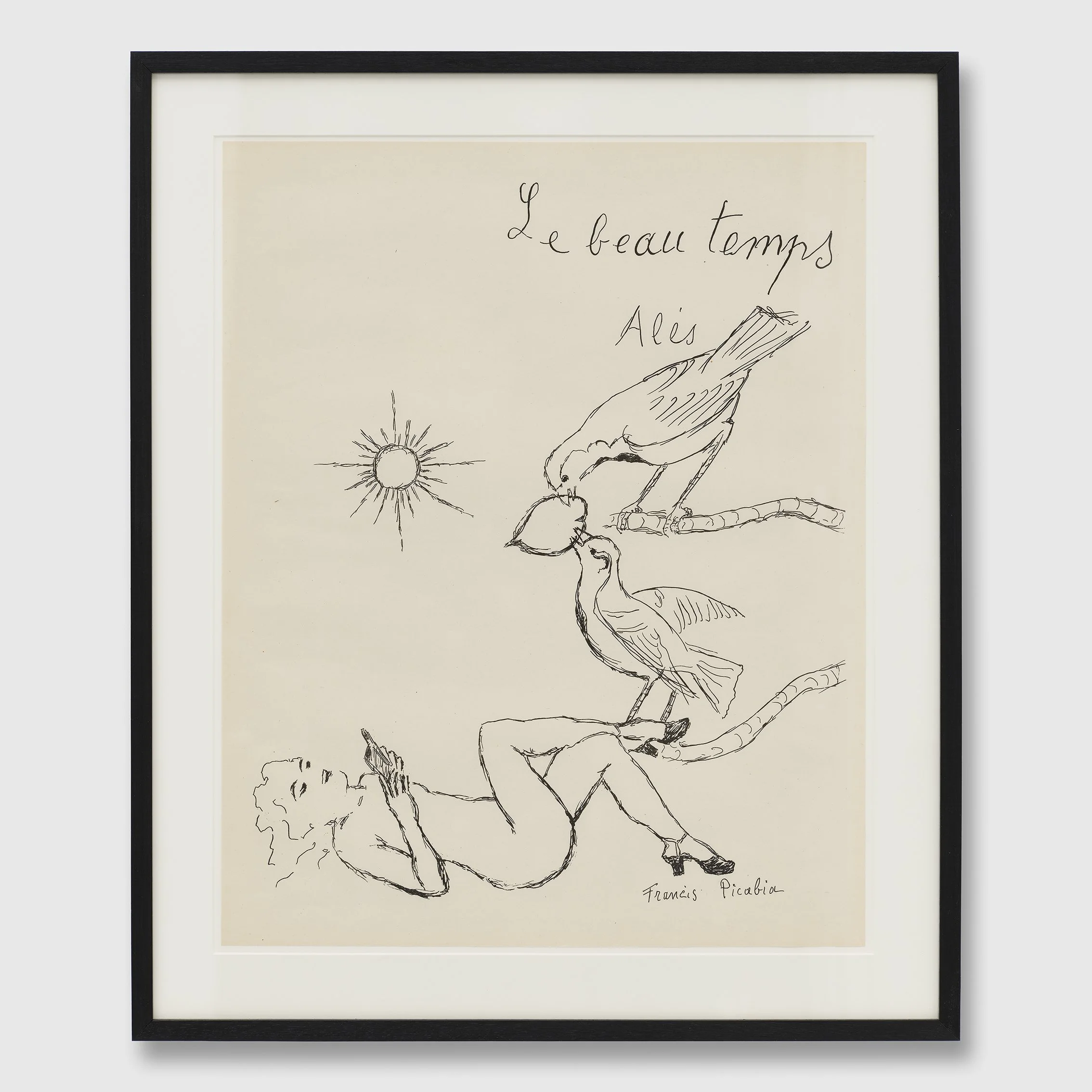

En 1950, Francis Picabia réalise une lithographie pour Le Beau Temps, une librairie fondée à Alès, dans le sud de la France, par son ami Pierre-André Benoit, dit PAB (1921–1993), poète, imprimeur et éditeur proche des avant-gardes artistiques et littéraires.
Leur collaboration, initiée dès 1948, s'inscrit dans une période d'intense expérimentation artistique et éditoriale. Ouverte en mai 1950, la librairie accueille une exposition de peintures, dessins et livres de Picabia. L'artiste imagine pour l'occasion une composition lithographique destinée à servir aussi bien d'affiche que de papier d'emballage pour les livres vendus sur place.
L'aventure ne durera que quelques semaines. Cet usage insolite, associé à l'existence éphémère de la librairie, explique la rareté des exemplaires conservés en excellent état. Réalisée trois ans avant la disparition de Picabia, Le Beau Temps – Alès témoigne d'une collaboration artistique singulière, à la croisée de l'art, de la poésie et de l'édition.
·
In 1950, Francis Picabia created a lithograph for Le Beau Temps, a bookshop founded in Alès, southern France, by his friend Pierre-André Benoit, known as PAB (1921–1993), a poet, printer and publisher closely associated with the artistic and literary avant-garde.
Their collaboration, which began in 1948, was part of a period of intense artistic and editorial experimentation. Opened in May 1950, the bookshop hosted an exhibition of Picabia’s paintings, drawings and books. For the occasion, the artist conceived a lithographic composition intended to serve both as a poster and as wrapping paper for books sold in the shop.
The venture lasted only a few weeks. This unusual use, combined with the short-lived existence of the bookshop, helps explain the rarity of examples preserved in excellent condition. Created just three years before Picabia’s death, Le Beau Temps – Alès stands as a testament to a remarkable artistic collaboration at the intersection of art, poetry and publishing.
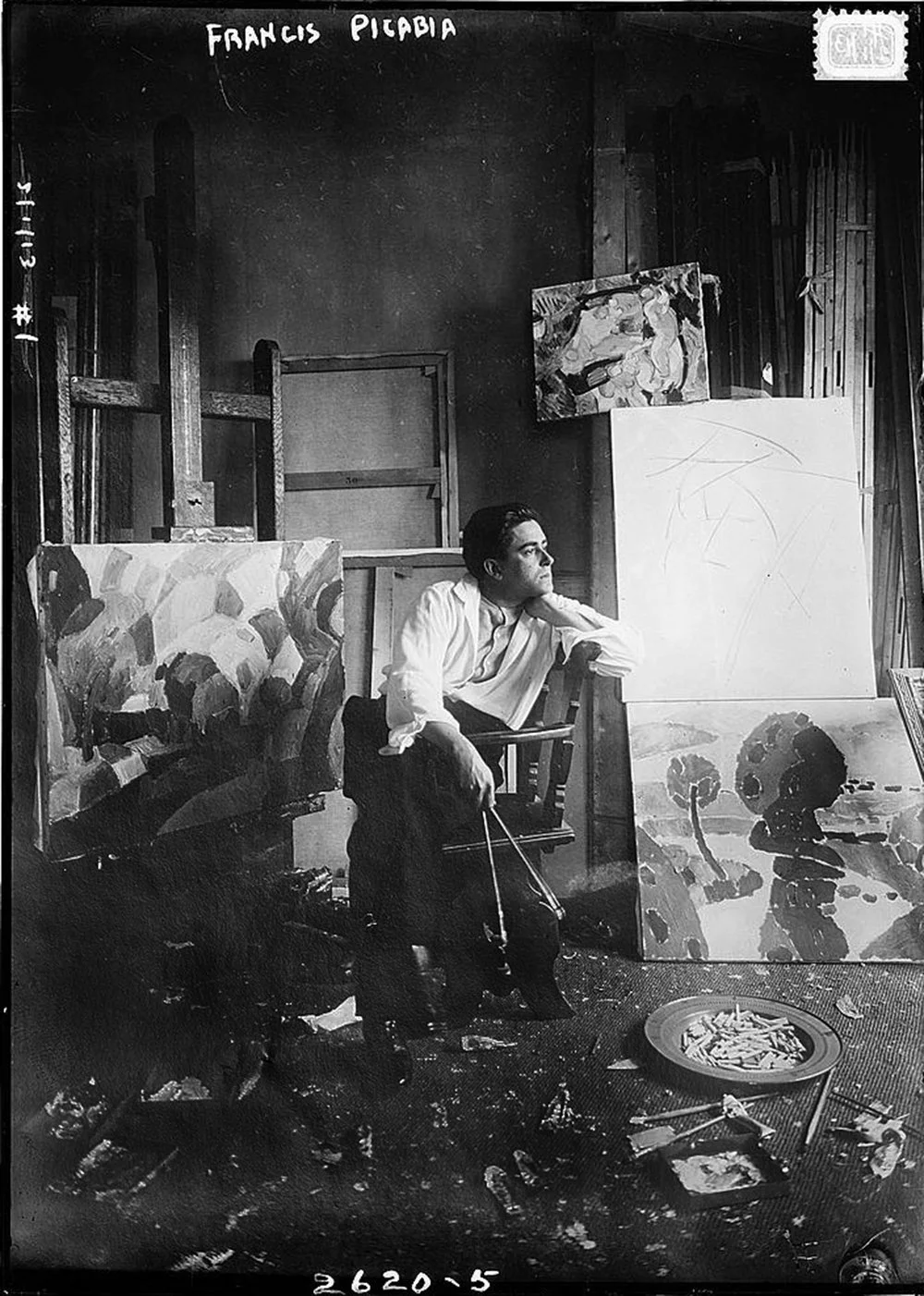
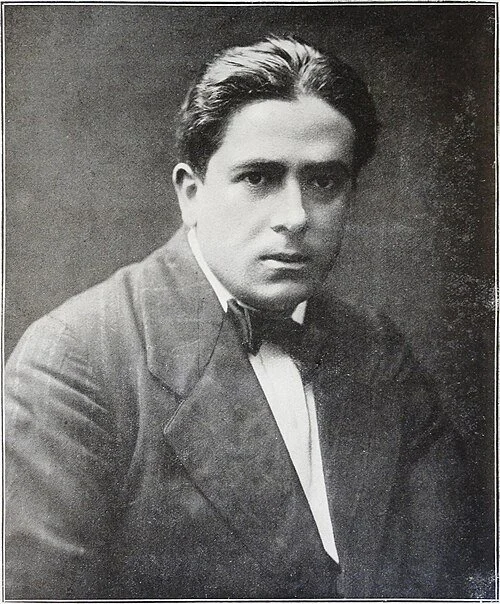
Francis Picabia (1879–1953) est un peintre, dessinateur, poète et écrivain français, figure majeure des avant-gardes artistiques du XXe siècle.
D'abord influencé par l'impressionnisme et le néo-impressionnisme, il explore successivement le fauvisme, le cubisme et l'abstraction, avant de devenir, aux côtés de Marcel Duchamp, l'un des principaux protagonistes du mouvement Dada à New York et à Paris. Son œuvre, profondément expérimentale, se distingue par une remise en question permanente des conventions artistiques. Des compositions mécanomorphes des années 1910 aux célèbres Transparences de la fin des années 1920, dans lesquelles figures et motifs se superposent, Picabia ne cesse de réinventer son langage pictural.
Également poète et éditeur de la revue d'avant-garde 391, il développe une pratique qui dépasse les frontières de la peinture et entretient un dialogue constant avec la littérature, la photographie et les arts graphiques. Refusant toute appartenance durable à un mouvement ou à un style, il fait de la liberté et de la contradiction les principes fondateurs de son œuvre.
Son travail figure aujourd'hui dans les collections de grandes institutions internationales, notamment le Museum of Modern Art (MoMA) à New York, le Centre Pompidou à Paris, l'Art Institute of Chicago, la Tate à Londres et le Solomon R. Guggenheim Museum à New York.
·
Francis Picabia (1879–1953) was a French painter, draftsman, poet and writer, and one of the leading figures of the twentieth-century avant-garde.
Initially influenced by Impressionism and Neo-Impressionism, he went on to explore Fauvism, Cubism and abstraction before becoming, alongside Marcel Duchamp, one of the central figures of the Dada movement in New York and Paris. His profoundly experimental practice was defined by a constant questioning of artistic conventions. From the mechanomorphic compositions of the 1910s to his celebrated Transparencies of the late 1920s, in which figures and motifs overlap, Picabia continually reinvented his visual language.
A poet and publisher of the avant-garde journal 391, he developed a practice that extended beyond painting, maintaining an ongoing dialogue with literature, photography and the graphic arts. Refusing to remain confined to any single movement or style, he made freedom and contradiction the defining principles of his work.
His works are held in major international collections, including the Museum of Modern Art (MoMA) in New York, the Centre Pompidou in Paris, the Art Institute of Chicago, Tate in London and the Solomon R. Guggenheim Museum in New York.
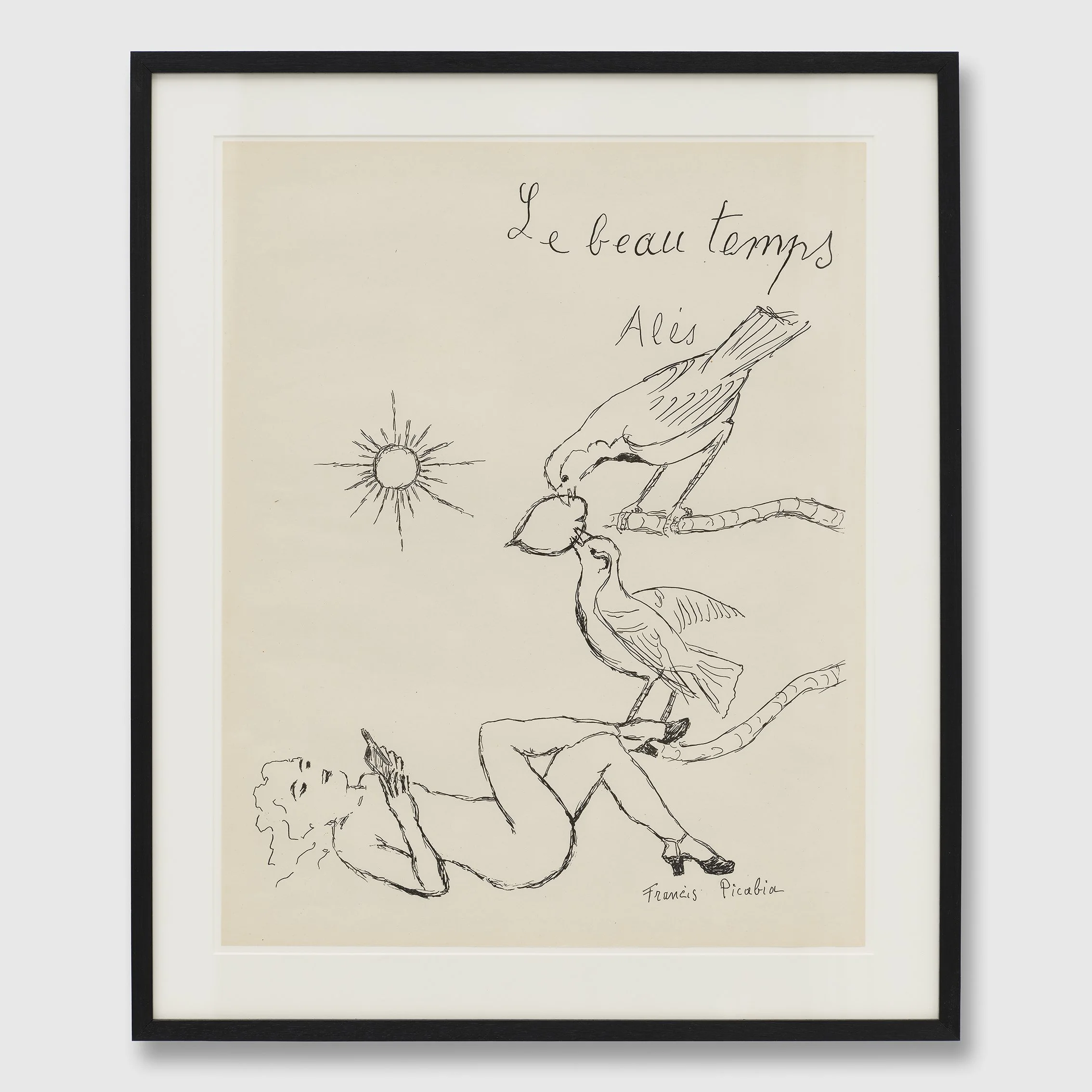
Le beau temps - Alès, 1950
Original lithograph on cream paper
Excellent condition
Custom-made frame with mat and hand-painted black wooden moulding
56 x 45 cm · 22 x 17,7 in
69 x 58 cm · 27,2 x 22,8 in framed